
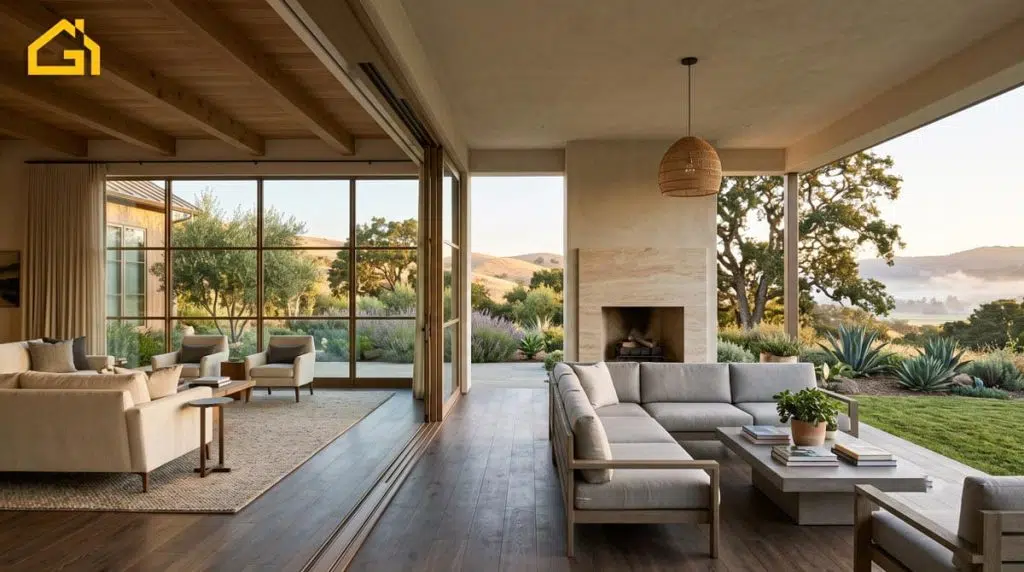
If you’ve spent an evening in a Silicon Valley backyard, you already know indoor-outdoor living design for California climate isn’t just a style choice — it’s a response to how much the weather shifts across the Bay Area, from dry heat in San Jose to afternoon fog near Redwood City. Getting the transition between inside and outside right means designing for that range, not one perfect day. At Golden Gate Group, we’ve built that thinking into custom homes and remodels across Cupertino, Palo Alto, and the Peninsula, and this guide covers what actually makes these spaces work.
Architectural Features That Blur the Line Between Indoors and Out
Good indoor-outdoor living design for California climate starts with the architecture itself — the doors, the roofline, and the floor — since these decide whether a space gets used or just looks good in photos.
Sliding and Folding Glass Wall Systems
| System type | Opening width | Best for |
|---|---|---|
| Multi-slide door | Up to 20+ feet | Wide rear walls |
| Bi-fold door | 10-20 feet | Corners, tighter layouts |
| Pocket sliding door | Varies | Fully hidden panels |
Thermally broken frames matter here. Bay Area evenings cool off fast even after a warm afternoon, and a poorly insulated system makes that swing obvious indoors.
Covered Patios and the “California Room” Concept
A California room sits between a patio and a sunroom: a roof, at least one solid wall, but still open to the outdoors.
- Stays usable through fog, light rain, or harsh sun
- Can hold fans, heaters, or a fireplace without full HVAC
- Reads as real living space, not just a patio
For homes near foggier areas like Redwood City or Menlo Park, this middle ground often gets used more than an open patio.
Remodel or Rebuild in Cupertino? How to Choose the Right Path for Your Home
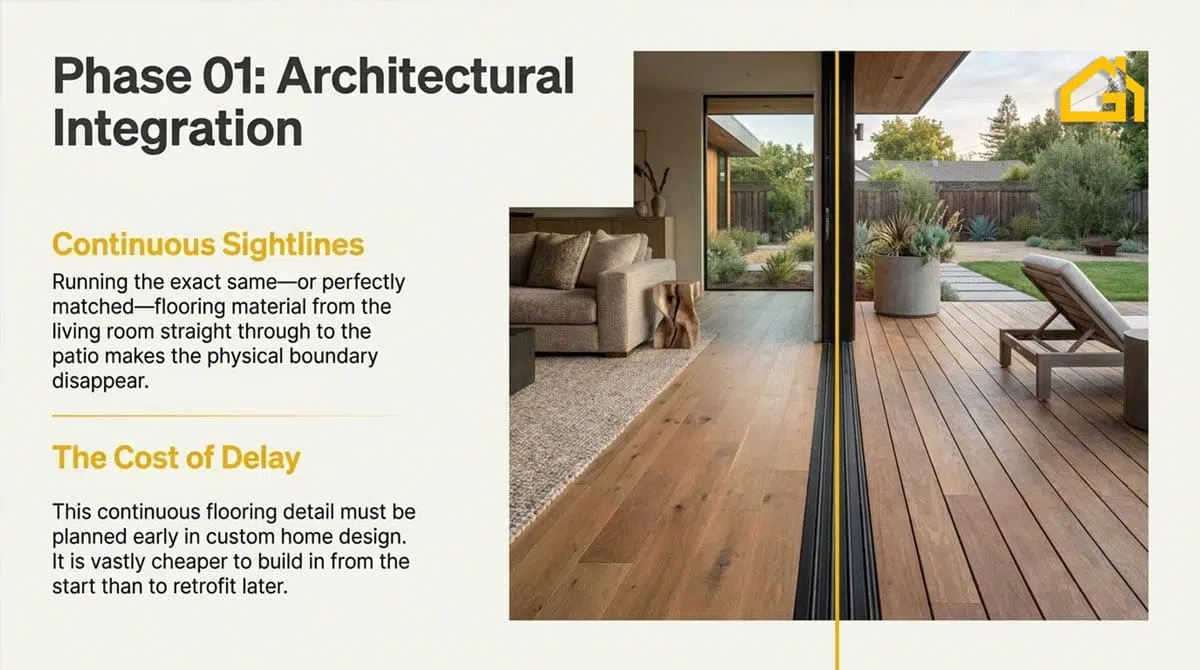
Continuous Flooring and Sightlines
Running the same or a matched flooring material from the living room straight through to the patio makes the transition disappear and the space feel larger. It’s a detail we plan for early in custom home design, since it’s far easier to build in from the start than to fix later.
Choosing Materials That Hold Up to Bay Area Weather
Materials in an indoor-outdoor space live a harder life than materials anywhere else in the house. They face UV exposure, temperature swings, and occasional fog moisture, often all in the same week.
Flooring and Surfaces for Year-Round Exposure
Porcelain pavers are one of the most reliable choices for this transition zone. They can be manufactured to match interior tile almost exactly, resist staining, and won’t crack under the freeze-thaw swings some hillside areas in Los Gatos or Saratoga see in winter. Natural stone like travertine or limestone looks beautiful but needs sealing every year or two to avoid etching from rain and sun exposure. Composite decking works well for raised or wood-frame patios, since it won’t warp the way real wood does under direct summer sun.
Furniture and Textiles Built to Last Outdoors
Not every “outdoor” label means the same level of durability.
- Frames: teak, powder-coated aluminum, and woven resin hold up best against sun and occasional moisture
- Cushions: solution-dyed acrylic fabric resists fading far longer than standard outdoor polyester
- Rugs: polypropylene outdoor rugs handle fog dampness without mildewing the way natural fiber rugs do
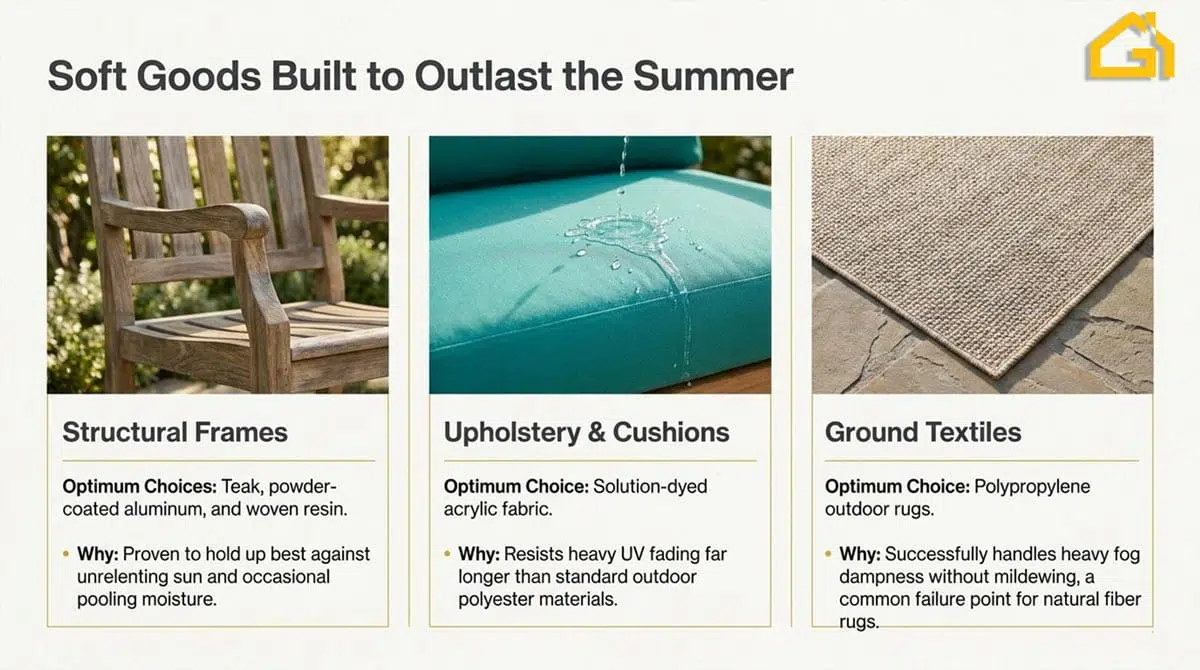
Getting this right avoids the common letdown of outdoor furniture that looks tired after one summer. It’s a detail we walk clients through as part of our interior design work, since material choice matters as much outdoors as it does inside.
Planning Indoor-Outdoor Living Into Your Project
Indoor-outdoor upgrades rarely show up as a single line item, which is why the scope is easy to underestimate when it’s planned too late. The smarter approach is to fold indoor-outdoor living design into your custom build or remodel from the very start, not as an add-on once the main house is finished.
A few things worth planning around:
- Multi-slide or bi-fold door systems vary based on width and frame quality, so it’s worth comparing options with your design team early, before the layout is locked
- A covered California room addition involves more than an open patio does, since it typically adds roofing, framing, and sometimes electrical or gas lines for heaters or a fireplace
- Landscaping and hardscape to tie the outdoor space together is its own separate scope, one we plan alongside the architecture rather than after
- If a pool or spa is part of the plan, that’s scoped independently too, as we cover in our swimming pool guide
Sequencing matters as much as the scope itself. Structural work like glass wall openings needs to be locked into permits before finishes are chosen, otherwise homeowners end up redoing already-finished work to accommodate structural changes. For a plan built around your property and vision, reach out to our team.
Conclusion
Getting indoor-outdoor living design for California climate right comes down to the details covered here: doors that hold up to real temperature swings, materials chosen for years of sun and fog rather than one good season, and a project plan that accounts for the whole space instead of just the doors. If you’re planning a custom home or remodel anywhere from Cupertino to the Peninsula and want that transition done properly from the start, reach out to our team and we’ll walk through what makes sense for your property.