
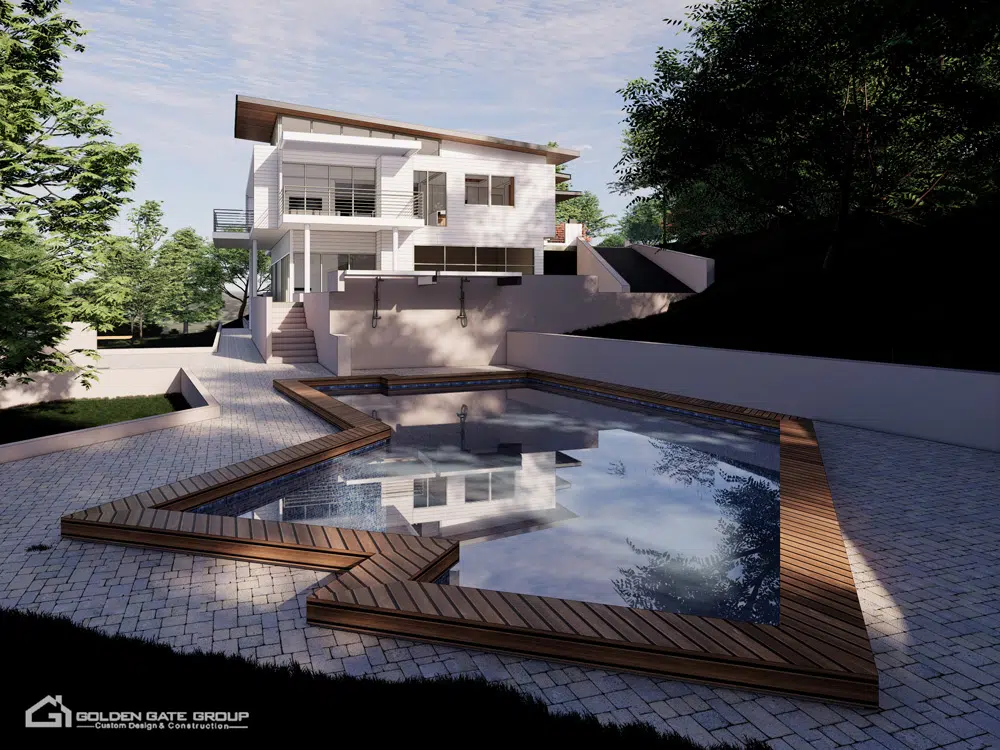
Building a luxury custom home in Silicon Valley involves far more than square footage alone. Location, site conditions, architectural complexity, structural engineering, permit requirements, and finish selections all play a major role in how a project comes together. In this guide, we’ll break down what defines a luxury custom home in Silicon Valley, what goes into planning and building one, and how to approach the process with more confidence from day one. If you’re considering a high-end custom home project, the team at Golden Gate Group can help you evaluate your lot, define your vision, and move from planning to construction with confidence.
What Defines a Luxury Custom Home in Silicon Valley?
A luxury custom home is defined less by square footage and more by the level of customization, craftsmanship, and design intent behind it. In areas such as Palo Alto, Los Altos Hills, Saratoga, Atherton, and the surrounding hillside neighbourhoods, luxury custom homes often combine bespoke architecture, premium materials, advanced home systems, and extensive indoor-outdoor living spaces.
| Luxury Home Type | Typical Scope |
|---|---|
| Entry-Luxury Custom Home | Custom floor plan, quality materials, selected premium finishes, upgraded kitchen and bathrooms |
| High-End Luxury Custom Home | Fully custom design, premium finishes, advanced systems, detailed interiors, upgraded outdoor spaces |
| Ultra-Luxury Estate | Complex architecture, estate-level amenities, imported materials, high-end automation, extensive landscaping |
Design Complexity and Craftsmanship
A modern luxury home with clean lines may look simple from the outside, but it can still be one of the most demanding homes to build well. Large window systems, steel framing, flush details, concealed lighting, high ceilings, and seamless indoor-outdoor transitions often require more precision, more engineering, and more specialized trades than a standard build. The finished simplicity is usually the result of a much more complex design and construction process behind the scenes.
What Goes Into Building a Luxury Custom Home
When people picture a luxury custom home, they often focus on visible elements such as finishes, kitchens, bathrooms, and exterior design. In reality, a luxury build is the result of two closely connected efforts: the physical construction work, and the professional planning, design, and approval process that has to happen alongside it.
Construction and Site Work
This is the hands-on work that turns a design into a finished residence, including:
- Site preparation: demolition, clearing, grading, excavation, drainage, and utility trenching
- Foundation and structure: concrete, framing, steel, seismic reinforcement, and retaining walls
- Exterior construction: roofing, siding, stucco, stone, windows, exterior doors, waterproofing, and insulation
- Mechanical systems: HVAC, plumbing, electrical, solar readiness, EV charger wiring, and smart home infrastructure
- Interior finishes: flooring, cabinetry, countertops, tile, fixtures, appliances, lighting, paint, and custom millwork
- Outdoor areas: driveways, patios, decks, landscaping, irrigation, pools, spas, outdoor kitchens, and hardscape features
In Silicon Valley, this work becomes more involved when a home includes large glass openings, complex structural spans, hillside construction, or detailed architectural finishes that call for specialized trades.
Design, Engineering, and Approvals
Alongside construction, a luxury home requires a significant amount of professional and administrative work to get the design approved and ready to build. This part of the process isn’t always visible, but it shapes almost every decision that follows.
| Category | What It May Include |
|---|---|
| Design and planning | Architect, interior designer, landscape architect, 3D renderings, design revisions |
| Engineering and reports | Structural engineer, civil engineer, geotechnical report, survey, arborist report if needed |
| Permits and city process | Building permits, plan review, inspections, and any specialty permits required |
| Compliance and consulting | Title 24 energy calculations, green building requirements, fire safety review, utility coordination |
| Project coordination | Construction management, scheduling, and communication between designers, engineers, and trades |
For a luxury custom home, this part of the process should be planned for from the very beginning rather than treated as an afterthought once construction starts.
How a Luxury Custom Home Project Comes Together
Understanding how a luxury home project is typically sequenced can make the whole process easier to plan for. While every project is unique, most luxury builds move through the same broad phases, from design and permitting through construction, finishing, and site work.
Design and Architecture
Architectural design is usually the first major phase and often shapes every phase that follows. The scope may range from straightforward construction drawings to fully customized design packages with detailed interior and exterior coordination, including:
- Concept and schematic design
- Construction drawings
- Permit documentation
- Design revisions and client meetings
- Interior design coordination
- Landscape design planning
Engineering and Consultants
Luxury homes often require multiple specialists to make sure the design meets structural, environmental, and local code requirements.
| Common Consultant | Typical Role |
|---|---|
| Structural Engineer | Structural calculations and framing design |
| Civil Engineer | Drainage, grading, and site improvements |
| Surveyor | Property boundary and topographic surveys |
| Geotechnical Engineer | Soil analysis and foundation recommendations |
| Energy Consultant | Title 24 and energy compliance requirements |
Projects with hillside construction, large retaining walls, or challenging soil conditions typically need additional engineering input earlier in the process.
Permits and City Review
Every Silicon Valley municipality has its own review process, building standards, and approval timeline. Depending on the location, a project may go through multiple rounds of plan review, additional consultant reports, environmental studies, or design review before permits are issued. Working with professionals who understand local permitting procedures can help identify potential challenges early and reduce unexpected delays later in the process.
Site Preparation
Before the foundation is poured, the property often needs substantial preparation. This can include demolition, excavation, grading, drainage improvements, utility trenching, and tree protection measures. Properties with steep slopes, difficult access, or poor soil conditions typically need more extensive site work than flat infill lots.
Foundation and Structural Work
The structural portion of a luxury home supports the entire building and must meet California seismic requirements, which makes it one of the more technically demanding parts of the project. Key considerations include foundation type, structural steel requirements, basement construction, retaining walls, seismic reinforcement, long-span framing systems, and large window and door openings.
Mechanical, Electrical, and Plumbing
MEP systems in a luxury home go well beyond standard function. Multi-zone HVAC, radiant heating, solar and battery infrastructure, EV charging, whole-home water filtration, and smart home wiring all fall under this category, and they typically need to be planned early so they can be integrated cleanly into the architectural design rather than added on afterward.
Interior Finishes
Interior finishes are often where a project’s character comes through most clearly.
| Finish Category | Examples |
|---|---|
| Flooring | Hardwood, natural stone, large-format tile |
| Cabinetry | Custom built-ins and millwork |
| Countertops | Quartzite, marble, premium quartz |
| Appliances | Professional-grade appliance packages |
| Lighting | Decorative fixtures and architectural lighting |
| Plumbing Fixtures | Designer faucets and specialty fixtures |
Exterior, Landscaping, and Hardscape
Many homeowners focus on the house itself and underestimate how much planning goes into the outdoor spaces. In luxury projects, exterior features are often just as involved as the home, including custom driveways, patios and terraces, outdoor kitchens, fire pits and fireplaces, swimming pools and spas, retaining walls, landscape lighting, and irrigation systems. A well-designed outdoor environment adds both functionality and long-term value to the property.
Building in Flexibility
Even well-planned luxury projects encounter unforeseen site conditions, material lead-time issues, or design adjustments once construction is underway. Building flexibility into the schedule and decision-making process, rather than treating changes as a crisis when they come up, gives homeowners far more control over how the project ultimately comes together.
Key Factors That Shape Luxury Custom Home Design in Silicon Valley
Even homes with similar square footage can look and function very differently depending on site conditions, design decisions, and local regulations. Understanding these factors early helps homeowners set more realistic expectations before design and construction begin.
Location Within Silicon Valley
Where you build affects far more than the view. Different cities have different permit processes, development requirements, review standards, and construction market conditions. In many higher-end neighbourhoods, homeowners may also encounter stricter design review standards or additional approval requirements that can extend project timelines.
Lot Condition and Site Preparation
Not all lots are equally buildable. A flat, cleared parcel with existing utility access is generally more straightforward to develop than a hillside property or a site with challenging soil conditions. Projects often become more involved when they require extensive grading or excavation, retaining walls, soil stabilization measures, demolition of existing structures, drainage improvements, or tree protection and removal. Site-related considerations are frequently underestimated during early planning, which is why professional site evaluation is such an important first step.
Home Size and Layout Complexity
Larger homes typically involve more construction work, but square footage alone doesn’t determine how complex a project is. A straightforward 5,000-square-foot floor plan can be simpler to build than a smaller home with multiple rooflines, large cantilevers, double-height spaces, extensive glazing, or complicated structural transitions. As design complexity increases, so does construction coordination and specialized labour.
Architectural Style
Architectural choices have a major impact on how a home is engineered and built.
| Architectural Feature | Design and Engineering Consideration |
|---|---|
| Large floor-to-ceiling glass systems | More demanding structural and installation requirements |
| Flat roofs with concealed drainage | More detailed waterproofing design |
| Open-concept layouts | Increased structural engineering |
| Custom exterior materials | More specialized sourcing and installation |
| Complex roof geometry | Additional framing and roofing coordination |
Homes that emphasize custom detailing and precision craftsmanship generally require more time and more specialized trades to complete well.
Material and Finish Selection
Material choices shape the character of a home more directly than almost any other decision. This applies across every category, including flooring, cabinetry, countertops, roofing, siding, windows, plumbing fixtures, appliances, and lighting. Imported stone, custom European cabinetry, handcrafted tile, and architectural-grade windows all carry longer lead times than their domestic or semi-custom equivalents, so selections need to be made early enough that they don’t affect the construction schedule. The finish level for a project should be established during the design phase and reflected in decisions from the start, rather than adjusted later once construction is already underway.
Structural Engineering Requirements
Structural needs vary from one property to another. Silicon Valley homes must meet strict seismic standards, and certain designs require additional engineering beyond typical residential construction. Projects may need more extensive structural solutions when they include large open spans, multi-storey glass walls, hillside construction, basements, retaining walls, or cantilevered architectural elements.
Permits, Plan Review, and Local City Requirements
Every municipality has its own review process, building standards, and approval structure. Working with professionals who understand local permitting procedures can help homeowners identify potential design or scheduling challenges early, rather than discovering them partway through the review process.
Luxury Features to Consider
Luxury features shape the character and livability of a custom home well beyond the finishes on the surface. Some upgrades are relatively simple to incorporate, while others call for specialized construction, engineering, or infrastructure.
Chef’s Kitchen
A chef’s kitchen typically combines professional-grade appliances, custom cabinetry, large islands, natural stone countertops, and, in some homes, a secondary prep kitchen or scullery. It’s often the room where design and function need to work together most closely.
Spa-Style Bathrooms
Luxury bathrooms typically go well beyond upgraded fixtures. Features such as oversized showers, freestanding tubs, heated flooring, custom vanities, and premium stone finishes create a spa-like feel that standard bathroom designs don’t offer.
Smart Home Automation
The scope of home automation varies widely based on the level of integration a homeowner wants. Basic systems may control lighting and climate, while more advanced platforms can manage security, audio, video, window coverings, energy monitoring, and remote access throughout the property.
Outdoor Living Spaces
Many Silicon Valley homeowners invest heavily in outdoor amenities to extend usable living space beyond the home itself, including outdoor kitchens, covered patios, fire features, swimming pools and spas, integrated landscape lighting, and retractable glass walls that blur the line between indoor and outdoor living. These features often require additional utility work, structural support, and specialized installation.
Sustainability and Energy Efficiency
| Upgrade | Potential Benefit |
|---|---|
| Solar power systems | Reduced reliance on grid power |
| High-performance windows | Improved thermal efficiency |
| Enhanced insulation | Better year-round energy performance |
| Heat pump HVAC systems | Lower energy consumption |
| Battery storage systems | Backup power and energy management |
As California energy standards continue to evolve, many of these features are becoming increasingly common in luxury custom home construction.
Custom Home vs. Luxury Custom Home: What’s the Difference?
Not every custom home is considered a luxury custom home. While both are designed specifically for the homeowner, luxury homes typically involve a higher level of customization, more complex construction, premium materials, and specialized craftsmanship. The difference isn’t simply about size. A luxury custom home often includes architectural details, advanced technology, bespoke interiors, and high-end amenities that require additional design coordination and construction expertise.
| Category | Custom Home | Luxury Custom Home |
|---|---|---|
| Design | Customized floor plan | Fully bespoke architectural design |
| Materials | Quality residential finishes | Premium and often custom-selected materials |
| Kitchen & Bathrooms | Upgraded standard features | Professional-grade appliances and luxury fixtures |
| Technology | Basic smart home options | Integrated whole-home automation systems |
| Outdoor Spaces | Standard landscaping | Resort-style outdoor living environments |
| Construction Complexity | Moderate | Often high due to custom details and engineering requirements |
Homeowners pursuing a luxury project should plan for additional coordination around design, engineering, premium finishes, and specialized features that help create a truly one-of-a-kind residence.
How Silicon Valley Cities Influence Design and Permitting
Location can influence the design and approval process through local regulations, design review requirements, and site conditions. Even similar homes may move through very different timelines depending on the city where they’re built.
- Palo Alto and Los Altos — Luxury homes here often involve more extensive design review and approval processes given the premium neighbourhoods and high level of customization typical in the area.
- Cupertino and Sunnyvale — Many projects in these cities are rebuilds on existing residential lots, where demolition, utility upgrades, and site improvements are common early steps.
- San Jose and Santa Clara — These cities offer a broader range of lot options and project scales compared to some of Silicon Valley’s higher-end markets.
- Saratoga and Los Altos Hills — Large lots, hillside properties, and estate-style homes are common here, often requiring additional grading, retaining walls, and structural engineering.
How to Plan a Luxury Custom Home Project
Set Clear Goals Early
Establishing a clear vision before design begins helps guide decisions on home size, features, materials, and overall project scope. Early planning also reduces the risk of costly redesigns later in the process.
Choose the Right Delivery Method
The project delivery approach affects both coordination and efficiency. Many homeowners prefer design-build services because design and construction teams work together from the beginning, helping identify potential issues before they become larger problems.
Finalize Selections Before Construction
Choosing finishes, fixtures, appliances, and materials before construction starts helps avoid delays and last-minute changes once the build is underway.
Build in Flexibility
Even well-planned projects can encounter unforeseen conditions or evolving preferences along the way. Planning for some flexibility in the schedule and decision-making process gives homeowners more room to adapt without derailing the project.
Work With a Local Silicon Valley Custom Home Builder
An experienced local builder understands regional construction practices, permitting requirements, subcontractor networks, and city-specific regulations, which helps homeowners make more informed decisions throughout the project.
Is Building a Luxury Custom Home in Silicon Valley Worth It?
For homeowners seeking a personalized living experience, a luxury custom home offers long-term value that goes well beyond the initial build. It allows complete control over design, layout, finishes, technology, and overall functionality, creating a home that’s shaped entirely around how you actually want to live. With careful planning and the right team, the result is a home tailored to your lifestyle, needs, and property, something that’s difficult to replicate by purchasing an existing home.
Conclusion
Building a luxury custom home in Silicon Valley depends on a wide range of factors, from location and site conditions to design complexity, finish selections, and local permitting requirements. Understanding these considerations early, and working with experienced professionals, can help you plan more confidently and make informed decisions throughout the building process.
Our Service Areas
At Golden Gate Group, we proudly serve clients across the Bay Area, including cities like Cupertino, Palo Alto, Mountain View, Sunnyvale, and beyond. Our expert team is ready to assist with all your custom home building needs, whether you’re starting from scratch with a new build or renovating an existing property. Our dedication to superior craftsmanship and outstanding customer service makes us the go-to choice for luxury homes. Reach out to us today to discover how we can turn your dream home into a reality.