
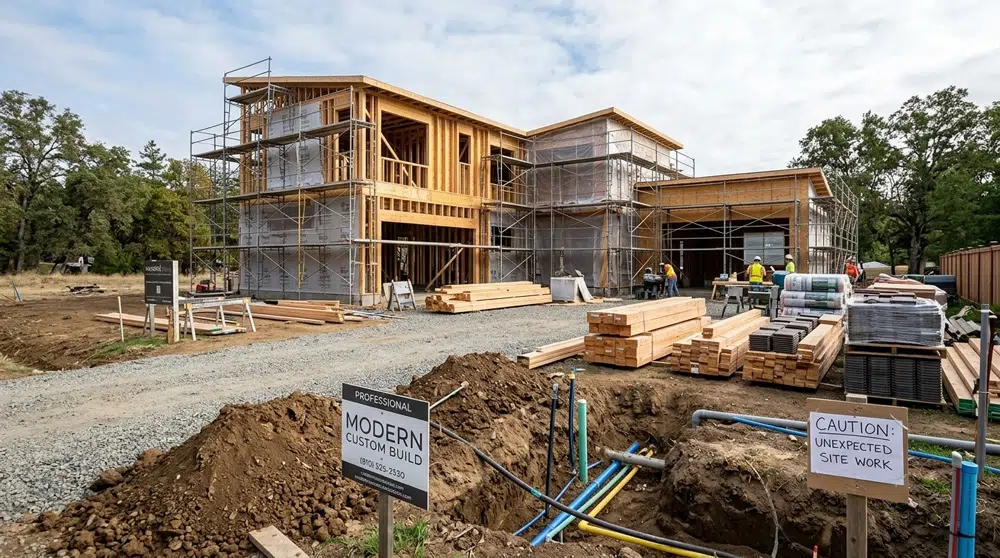
Hidden costs of building a custom home are one of the biggest surprises homeowners face once construction begins. At the start, most people focus on obvious expenses like land, construction materials, and labor. Those are important, but they rarely tell the whole financial story.
What often catches homeowners off guard are the smaller, less visible expenses that appear throughout the design, permitting, and construction process. Individually they may not seem dramatic. Together, they can add tens of thousands of dollars to the total cost of a custom home.
This guide explores the hidden costs of building a custom home, explaining where these expenses come from and how thoughtful planning can keep them under control.
Why Hidden Costs Appear in Custom Home Projects?
Building a custom home is fundamentally different from purchasing an existing house or even buying a production builder home. Every decision is unique to the property, the design, and the homeowner’s preferences.
Because of this customization, certain costs cannot be accurately estimated until the project progresses through design, permitting, and site preparation. Soil conditions might require additional foundation work. Local building departments may request design revisions. Material choices can evolve as homeowners see real samples instead of concept drawings.
Another factor is that early estimates are often based on average conditions. Once construction begins, the real conditions of the land and the final design details reveal the true scope of work.
This is why experienced builders emphasize contingency budgets and detailed planning long before construction begins.
Site Preparation and Land Development Costs
Before a single wall is framed, the land itself must be prepared for construction. Many homeowners assume a piece of land is ready to build on once it is purchased, but the reality is often more complicated.
Typical site preparation expenses include:
- Land clearing and tree removal
Removing trees, rocks, and debris can require heavy equipment and disposal costs.
- Grading and soil stabilization
The land must be leveled and shaped so the foundation can sit on stable ground.
- Excavation for foundation and drainage
Digging for basements, crawlspaces, and drainage systems often reveals soil conditions that require additional work.
- Retaining walls or slope adjustments
Sloped properties frequently require engineered retaining structures.
These costs vary significantly depending on the condition of the property. A flat urban lot may require minimal work, while a wooded or sloped rural lot can add substantial preparation expenses.
Utility Connections and Service Installations
Many new homeowners assume utilities are already available at the property line. In reality, connecting a custom home to essential services can be a significant hidden expense.
| Utility Service | Potential Hidden Cost | Why It Happens |
|---|---|---|
| Water connection | Municipal hook‑up fees or well drilling | Properties outside city infrastructure often require wells |
| Sewer system | Municipal connection or septic installation | Rural areas may require engineered septic systems |
| Electricity | Transformer installation or trenching | Long driveways increase wiring distance |
| Natural gas | Line extension fees | Utility companies charge for extending service lines |
| Internet and communications | Fiber installation or special infrastructure | High‑speed service may not exist in new developments |
Utility installation can range from a few thousand dollars to much more depending on location and distance from existing infrastructure.
Architectural Design Changes During Construction
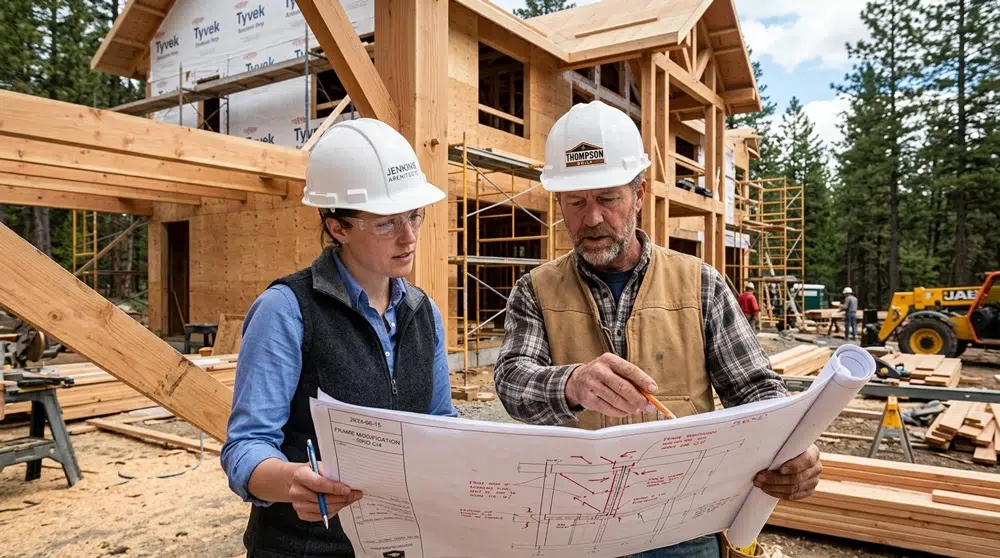
The allure of a custom home lies in its uniqueness, allowing homeowners to personalize every aspect. However, this very flexibility can introduce unforeseen expenses, particularly when design changes occur after construction has commenced. What might appear as a minor adjustment on paper (perhaps relocating a window or altering a room’s dimensions) can trigger a cascade of costs. These include the expense of revised architectural drawings and engineering reports, additional permit applications or amendments, and the labor involved in dismantling and redoing completed work. Furthermore, changes can disrupt the construction schedule, leading to increased carrying costs and potentially impacting material procurement timelines and pricing. Therefore, thorough design finalization before breaking ground is crucial to mitigate these financially impactful mid‑project alterations.
Permit Fees, Development Charges, and Inspections
Local municipalities regulate residential construction through permits, development charges, and mandatory inspections. These costs vary widely depending on the region, but they are frequently underestimated.
Permit related costs may include:
- building permit application fees
- development or impact fees
- environmental assessments
- zoning adjustments
- engineering approvals
- multiple inspection stages during construction
In some municipalities, development charges alone can reach tens of thousands of dollars. These fees are required before construction can proceed, so they must be included in the overall project budget.
Material Price Fluctuations
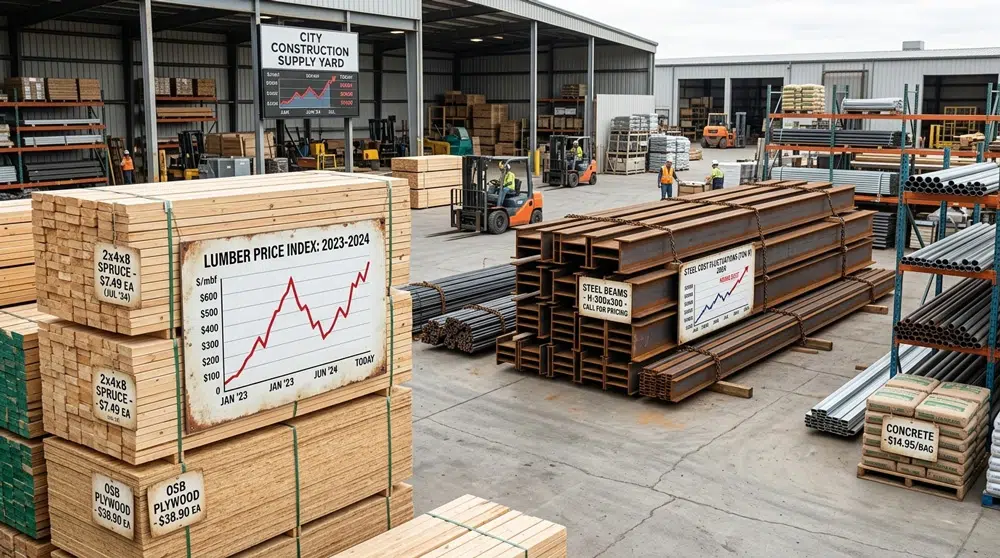
A significant, often underestimated, financial pitfall in custom home construction is the volatility of material prices. The construction of a bespoke residence is rarely a swift process; it can span many months, if not over a year. During this extended period, the cost of essential building components, from lumber and steel to insulation and roofing, can fluctuate considerably due to global market dynamics, supply chain disruptions, and demand. An initial quote or budget might be based on prices from months prior, and by the time materials are ordered, their cost may have risen substantially. This variability can add thousands of dollars to the project’s total expenditure. To navigate this, builders often incorporate material price escalation clauses or suggest a robust contingency fund to absorb these unexpected increases, ensuring the project’s financial integrity.
Interior Finish Upgrades
Interior finishes are where homeowners often personalize their space the most. Kitchens, bathrooms, flooring, and lighting fixtures dramatically influence both the aesthetics and the cost of the home.
Many construction budgets include allowances for finishes. These allowances represent a reasonable average cost, but homeowners sometimes choose products that exceed those amounts.
Examples of common upgrade costs include:
- premium hardwood or natural stone flooring
- custom cabinetry and millwork
- luxury appliances
- imported tiles and fixtures
- designer lighting
These upgrades are not necessarily negative. They simply need to be anticipated early so they align with the overall construction budget.
Landscaping and Exterior Features
After the home itself is complete, many homeowners realize the surrounding property still requires significant work.
Unlike interior construction, landscaping is sometimes overlooked during the early budgeting phase. Yet it can substantially affect the final cost of the project.
Typical landscaping expenses include driveway installation, walkway construction, retaining walls, fencing, and garden design. Irrigation systems, outdoor lighting, and patio structures also contribute to the final budget.
The scale of landscaping depends heavily on the size of the property. Large lots require more grading, soil preparation, and planting work to create a finished outdoor environment.
Temporary Living and Carrying Costs
Building a custom home is a long process. Depending on complexity and location, the timeline can range from several months to more than a year.
During this period, homeowners often face additional financial responsibilities such as rent, mortgage payments on existing properties, or construction loan interest.
Common carrying costs include:
- temporary housing rent
- construction loan interest
- property taxes on the building lot
- insurance during construction
- storage costs for furniture and belongings
These costs accumulate gradually throughout the project timeline. Planning for them in advance helps prevent financial pressure during the final stages of construction.
Contingency Budget for Unexpected Issues
Even the most carefully planned custom home projects encounter surprises. Construction involves many variables including weather conditions, soil characteristics, supply delays, and regulatory changes.
A contingency budget acts as a financial safety buffer. Most builders recommend setting aside 5% to 15% of the total construction budget for unforeseen expenses.
Typical situations where contingency funds are used include hidden soil issues, drainage modifications, structural reinforcements, or design adjustments required by inspectors.
Without a contingency reserve, homeowners may be forced to compromise on finishes or delay parts of the project when unexpected costs arise.
How to Reduce Hidden Costs When Building a Custom Home?
Preventing every unexpected cost is impossible, but smart planning dramatically reduces the risk.
Homeowners who successfully manage their budget often follow several key strategies:
- Work with an experienced design‑build team that understands local regulations and construction challenges.
- Complete detailed design planning before construction begins. The more decisions made early, the fewer costly changes occur later.
- Conduct soil tests and site evaluations before finalizing the foundation design.
- Request realistic allowances for interior finishes rather than relying on minimal placeholder budgets.
- Maintain a contingency reserve throughout the project.
These steps create a clearer financial roadmap and allow homeowners to make confident decisions during construction.
Expert Insight: Why Transparency Matters in Custom Home Projects?
One of the biggest differences between smooth projects and stressful ones is transparency around budgeting. When builders openly discuss the potential hidden costs of building a custom home, clients are able to plan realistically rather than relying on overly optimistic estimates.
Experienced custom home builders typically walk clients through each stage of the process, explaining which costs are fixed and which may vary. This collaborative approach builds trust and allows homeowners to prioritize the features that matter most to them.
In practice, the goal is not to eliminate customization but to guide it responsibly. A well planned custom home project balances creativity, functionality, and financial clarity.
Conclusion
The hidden costs of building a custom home often appear in areas homeowners rarely consider at the beginning of the project. Site preparation, utility connections, permit fees, material price changes, and interior upgrades can significantly influence the final budget.
None of these costs are unusual. In fact, they are a normal part of building a personalized home from the ground up. The key difference between a stressful project and a successful one is preparation.
When homeowners understand these potential expenses early, they can budget more accurately, avoid surprises, and make informed decisions throughout the construction process. With proper planning and guidance from experienced professionals, building a custom home can remain an exciting and rewarding experience rather than a financial guessing game.