
When it comes to building a custom home, the cost differences between delivery methods can easily shape the entire direction of your project. Some homeowners lean toward Design-Build because it feels more controlled and predictable, while others prefer the traditional route of hiring an architect and a separate contractor. But the truth is, the cheaper option is not always obvious upfront, and it often depends on how design decisions, construction execution, and changes along the way are managed.
Quick Answer: Which Option Costs Less Overall?
There is no universal winner, but in most standard custom home projects, Design-Build tends to result in lower overall costs and fewer budget surprises. The main reason is not lower material or labor prices, but tighter coordination between design and construction, which reduces expensive changes during the build.
That said, the traditional Architect + Contractor model can sometimes come out cheaper when the project benefits from competitive bidding or when the design is well-defined from the start with minimal revisions.
Design build vs architect contractor cost comparison: Side-by-Side Cost Comparison
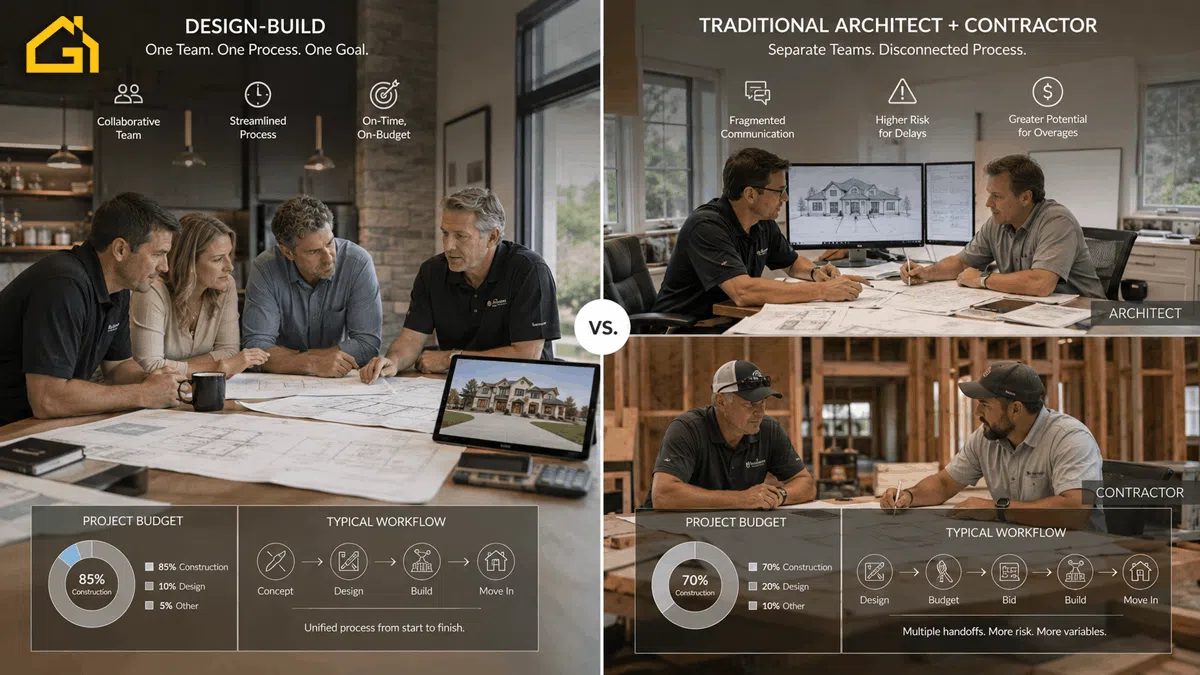
| Cost Factor | Design-Build | Architect + Contractor |
| Overall Budget Control | More predictable | More variable |
| Risk of Cost Overruns | Lower | Higher |
| Design Flexibility Impact on Cost | Managed early | Often discovered later |
| Contractor Pricing Method | Integrated pricing | Competitive or negotiated bids |
| Change Order Frequency | Typically fewer | Typically more |
Upfront Costs
In Design-Build, design fees are usually bundled into the overall contract, which makes early-stage costs feel more streamlined but not necessarily cheaper. With Architect + Contractor, you pay the architect separately, often as a percentage of the total construction cost, before even selecting a builder. This can make upfront spending more visible and sometimes higher before construction begins.
Construction Costs
Construction pricing in Design-Build is typically locked in earlier because builders are involved during the design phase. This helps align design choices with real construction budgets.
In contrast, the traditional model often reveals true construction costs only after bidding, and those bids can vary significantly depending on market conditions and contractor availability.
Soft Costs
Soft costs include architectural services, engineering, permits, and consulting fees. In Design-Build, these are usually integrated into one coordinated structure, while in the traditional model they are separated across multiple professionals.
Common soft cost components include:
- Architectural design and revisions
- Structural and engineering input
- Permit applications and approval processes
- Specialist consultant fees (if required)
The difference is not always in total amount, but in how fragmented or streamlined these expenses feel during the project lifecycle.
Long-Term Cost Predictability
Design-Build generally offers stronger cost predictability because design decisions are continuously checked against budget constraints.
With Architect + Contractor, cost uncertainty tends to be higher, especially when design intent evolves after contractor pricing or during construction. This is where many unexpected overruns typically originate, not from base pricing, but from adjustments made after the project has already started.
Cost Breakdown of a Design-Build Custom Home
Understanding where the money actually goes in a Design-Build project helps clarify why this model often feels more predictable. Instead of separating responsibilities across multiple contracts, most costs are grouped under a single coordinated structure, which reduces gaps between design intent and construction execution.
Design and Planning Costs
In a Design-Build setup, design and planning are typically handled within the same team that will later build the home. This includes initial concept development, architectural drawings, and early feasibility studies tied directly to budget expectations.
Typical components here include:
- Concept design and schematic layouts
- Architectural development drawings
- Early-stage budgeting and feasibility alignment
- Basic engineering input during design development
Because these stages are integrated with construction planning, design decisions are often filtered through real cost implications much earlier in the process.
Construction Costs
Construction costs represent the largest share of the total budget, covering everything from site preparation and foundation work to framing, finishes, and building systems. In a Design-Build setup, these costs are usually more stable because the builder is involved early, which reduces the risk of major pricing surprises once construction starts and helps keep material and labor choices aligned with the agreed budget.
Project Management Costs
Project management is embedded within the Design-Build structure, meaning there is usually a dedicated team overseeing both design coordination and construction execution. Instead of multiple parties managing separate contracts, oversight is centralized.
This typically covers:
- Scheduling and timeline coordination
- On-site supervision and quality control
- Coordination between design updates and construction teams
- Budget tracking throughout the project lifecycle
This integrated management approach often reduces inefficiencies that can lead to indirect cost increases in traditional setups.
Typical Total Cost Range
The total cost of a Design-Build custom home varies depending on size, location, and design complexity, but the key advantage is consistency between early estimates and final outcomes. Homeowners typically experience fewer unexpected adjustments during construction, which makes overall budget planning more predictable even when the starting estimate is similar to other building approaches.
Cost Breakdown of Hiring an Architect and Contractor
When you separate design and construction into two independent contracts, the cost structure naturally becomes more fragmented. This can create opportunities for competitive pricing, but it also introduces more points where budgets can shift as the project moves forward.
Architectural Fees
Architectural services are usually the first significant expense in this model and are paid before any construction pricing is finalized. These fees are commonly structured in one of two ways: a percentage of the total build cost or a fixed design fee that covers drawings, revisions, and documentation required for permitting.
In practice, the cost is influenced less by the fee structure itself and more by how many design iterations are needed before the project is ready for bidding.
Engineering and Consultant Costs
Engineering and specialist consultant costs sit outside the architect’s scope and are typically hired separately. These can include structural engineering, energy compliance, and soil or site analysis depending on the complexity of the build.
- Structural engineering for load-bearing design and safety compliance
- Energy or sustainability consulting depending on local regulations
- Site-specific studies such as soil testing or drainage analysis
Because these services are not bundled, coordination between professionals can sometimes lead to additional revisions and incremental cost increases.
Contractor Costs
Contractor pricing is where the most variability appears in this model. Once the architectural plans are finalized, multiple builders may submit bids based on the same drawings, but their pricing can differ depending on assumptions, material allowances, and current market conditions.
| Factor | Impact on Contractor Pricing |
| Material selection allowances | Can significantly shift total cost |
| Labor market conditions | High demand increases pricing |
| Interpretation of drawings | Leads to bid variation |
| Project timeline requirements | Faster builds often cost more |
Even small differences in interpretation or assumptions can lead to noticeable gaps between the lowest and highest bid.
Project Coordination Costs
Unlike Design-Build, coordination here is not centralized, which often makes it an indirect but real cost factor. Homeowners sometimes act as the main coordinator, or they hire a project manager to handle communication between all parties.
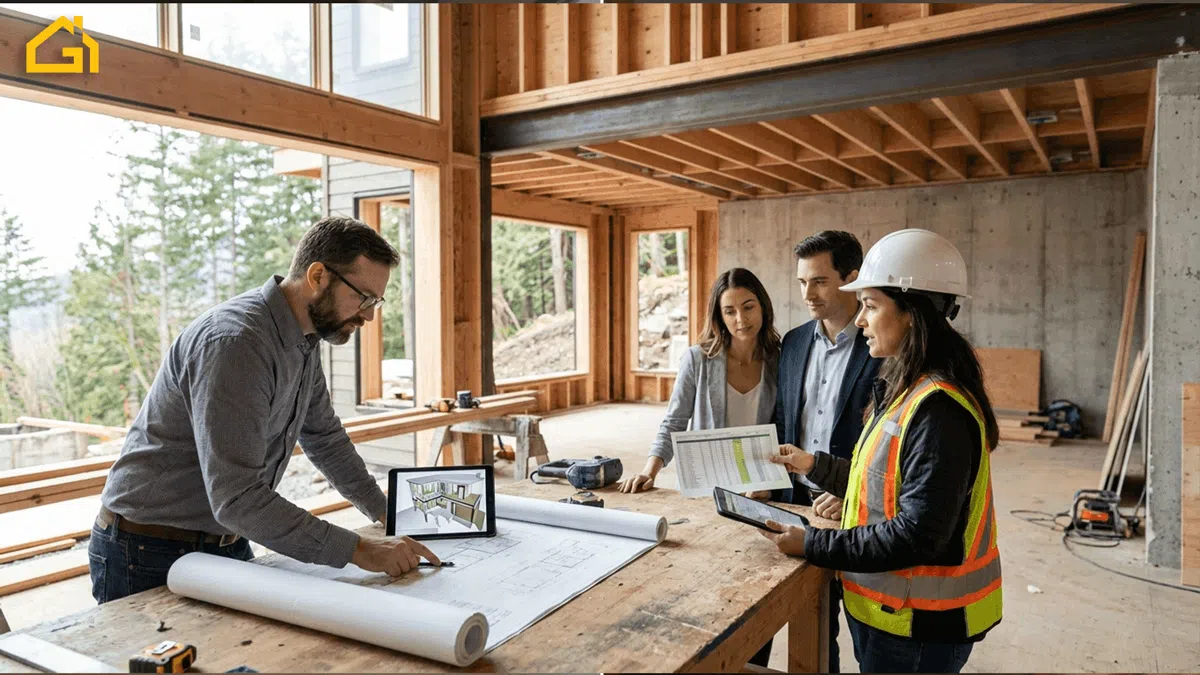
This can involve:
- Managing communication between architect and contractor
- Resolving design clarifications during construction
- Tracking changes and approvals across multiple stakeholders
These responsibilities do not always show up as a direct line item, but they can influence both time and budget efficiency throughout the project.
Typical Total Cost Range
The total cost outcome in this model tends to be more variable. While competitive bidding can sometimes reduce initial construction pricing, the final cost depends heavily on how stable the design is before construction begins and how smoothly coordination is handled during execution.
| Outcome Scenario | Cost Behavior |
| Well-defined design + competitive bids | Potentially lower final cost |
| Frequent design changes during build | Higher risk of overruns |
| Complex coordination needs | Increased indirect costs |
Overall, this approach offers more flexibility in pricing but also requires tighter management to avoid budget drift during construction.
Which Method Is More Likely to Stay Within Budget?
Budget control is often the real deciding factor in custom home projects, more than the initial price estimate itself. Both Design-Build and the Architect + Contractor model can work financially, but they manage cost uncertainty in very different ways throughout the project lifecycle.
Budget Control During Design
In Design-Build, budget control starts early and stays active throughout the design process. The builder is usually involved while plans are still evolving, which means design decisions are constantly tested against real construction costs.
In the Architect + Contractor model, design is often developed first with fewer cost constraints in real time. Budget alignment typically happens later, once the project is sent out for bidding, which can lead to adjustments after key design decisions are already finalized.
Cost Estimating Accuracy
Design-Build tends to produce more consistent estimates because pricing is developed alongside the design rather than after it. This allows the team to refine both scope and cost together, reducing the gap between early projections and final numbers.
In contrast, traditional estimating relies heavily on completed drawings and contractor interpretation. Even when plans are detailed, assumptions around materials, labor, and scope can vary between bidders, which makes early estimates less stable.
- Design-Build: Estimates are continuously refined during design
- Architect + Contractor: Estimates are typically fixed after bidding phase
- Key difference: timing of cost feedback loop
Risk of Cost Overruns
Cost overruns usually do not come from initial pricing, but from changes made after the project has already started.
In Design-Build, the integrated structure reduces this risk because major design decisions are already aligned with budget expectations before construction begins. Changes still happen, but they are typically smaller and more controlled.
With the Architect + Contractor model, the risk is higher because discrepancies between design intent and construction realities often surface later in the process. This can lead to change orders, rework, or material substitutions that increase total cost beyond the original estimate.
When Design-Build Is Usually the More Affordable Option
Design-Build is not always cheaper by default, but in certain project conditions it tends to deliver better cost control and fewer budget surprises. The advantage usually comes from tighter coordination between design and construction rather than lower base pricing.
Fixed Budget Projects
Design-Build works well when the budget is non-negotiable from the start. Since cost considerations guide design decisions early, the risk of redesign or overspending is reduced.
- Budget influences design decisions from day one
- Fewer changes after pricing feedback
- Lower chance of exceeding budget limits
Time-Sensitive Builds
When speed matters, Design-Build can help avoid delays that often increase costs in traditional projects. Overlapping design and construction planning reduces idle time between phases.
- Faster transition from design to construction
- Fewer bidding and contractor selection delays
- Less exposure to market price changes
First-Time Custom Home Projects
For first-time builders, Design-Build reduces the risk of costly miscommunication between separate parties. The integrated structure helps keep decisions aligned with actual construction realities.
- Fewer change orders
- Better alignment between design and build feasibility
- Less need for external coordination support
When Hiring an Architect and Contractor May Cost Less
In some situations, separating design from construction can actually lead to a lower total project cost. This usually happens when the project structure allows pricing competition or when design decisions are carefully optimized before construction begins, rather than being adjusted during the build.
Competitive Contractor Bidding
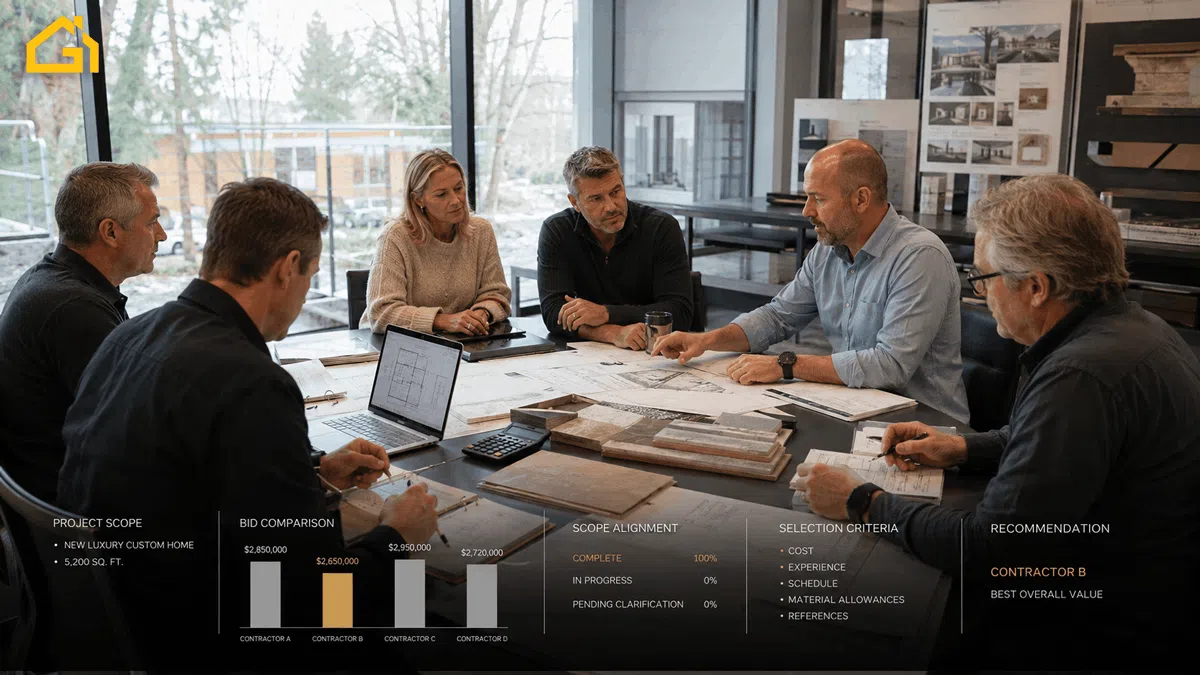
When a project goes out to bid with a complete and well-detailed set of drawings, contractors are essentially pricing the exact same scope of work. This creates a competitive environment where pricing becomes more aggressive and aligned.
Instead of relying on a single integrated price, homeowners benefit from comparing multiple real market offers. The biggest savings often come from differences in contractor strategy, workload, and margin expectations rather than changes in scope.
High-End Custom Designs
For complex or luxury homes, cost efficiency often comes from how well the design is resolved before construction pricing begins. In these projects, the architect has more time to refine details, explore material options, and resolve structural challenges before any contractor pricing is introduced.
| Design Stage Decision | Cost Impact |
| Early design refinement | Reduces expensive changes during construction |
| Material and finish selection before bidding | Improves pricing accuracy |
| Detailed architectural coordination | Limits redesign and rework risk |
In these cases, the financial advantage is not immediate, but it appears later through fewer costly adjustments during construction.
Homeowners Managing Costs Closely
This approach can also be more cost-effective when the homeowner takes an active role in managing decisions throughout the entire process. Instead of relying on a single integrated team, the homeowner becomes involved in evaluating bids, approving changes, and monitoring cost decisions.
In practice, this level of involvement helps prevent budget drift, but it also requires consistent attention and a clear understanding of how each decision affects the overall construction cost.
Conclusion
In the end, neither Design-Build nor the Architect + Contractor model is always cheaper. Design-Build usually offers more predictable costs because design and pricing are aligned early, while the traditional approach can sometimes be less expensive through competitive bidding and detailed upfront design. The real cost difference comes down to how well the project is defined and managed from start to finish.