
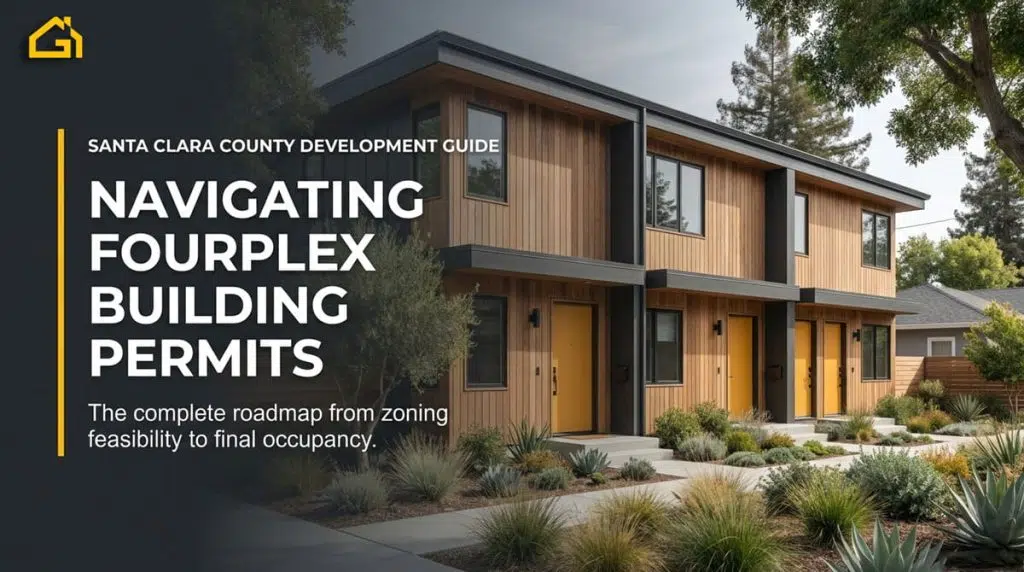
Securing Fourplex Building Permits in Santa Clara County is one of the first and most important steps for property owners planning to develop a four‑unit residential building. While fourplex projects are increasingly considered as a way to add housing and improve property value, approval depends on several local factors including zoning designation, lot characteristics, planning regulations, and compliance with county or city development standards. Understanding how these requirements apply to your property early in the process can prevent costly design revisions, delays in plan review, or permit denials later in the project.
Securing Fourplex Building Permits in Santa Clara County is one of the first and most important steps for property owners planning Multiplex & Fourplex Construction projects such as four‑unit residential buildings.
Are Fourplex Buildings Allowed in Santa Clara County?
Yes, fourplex developments may be allowed in Santa Clara County, but approval depends on the zoning designation and development standards that apply to the specific property. Before applying for Fourplex Building Permits in Santa Clara County, planning departments review whether the parcel allows multifamily housing, whether the lot can support four units based on density limits, and whether the project can comply with local development regulations such as setbacks, height limits, and parking requirements.
Zoning Districts That May Allow Fourplex Construction
Fourplex projects are generally permitted in zoning districts that allow multifamily or medium‑density residential development. While the exact zoning labels vary between jurisdictions, the following types of zones are the most common:
- Multi‑Family Residential zones where small apartment buildings and four‑unit structures are typically allowed.
- Medium‑density residential districts that permit small multifamily housing depending on lot size and density limits.
- Mixed‑use residential zones where residential units may be combined with nearby commercial or transit‑oriented development.
The specific density allowed on a parcel ultimately determines whether a four‑unit building can be approved.
County vs City Regulations: Why the Rules Can Differ
Santa Clara County contains many incorporated cities, and each city manages its own planning and building regulations. This means the process for obtaining Fourplex Building Permits in Santa Clara County can vary depending on the property’s jurisdiction.
Properties located in unincorporated county areas follow Santa Clara County planning regulations.
Properties located inside cities such as San Jose, Sunnyvale, Mountain View, or Palo Alto must comply with that city’s zoning code and permit procedures.
Because each jurisdiction sets its own development standards, requirements for density, parking, and building height can differ from one location to another.
For example, cities within the county may apply their own permitting procedures and review standards, similar to those explained in Building Permits in Cupertino.
How to Check If Your Property Qualifies for a Fourplex
Before preparing design plans, it is important to confirm whether the property can legally support four residential units. A basic feasibility review usually includes:
- Verifying the zoning designation of the parcel
- Checking allowed residential density and minimum lot size
- Reviewing setbacks, height limits, and lot coverage standards
- Evaluating parking and site access requirements
This preliminary review helps determine whether applying for Fourplex Building Permits in Santa Clara County is realistic before investing time and money in full architectural plans.
Key Zoning and Land‑Use Requirements for Fourplex Projects
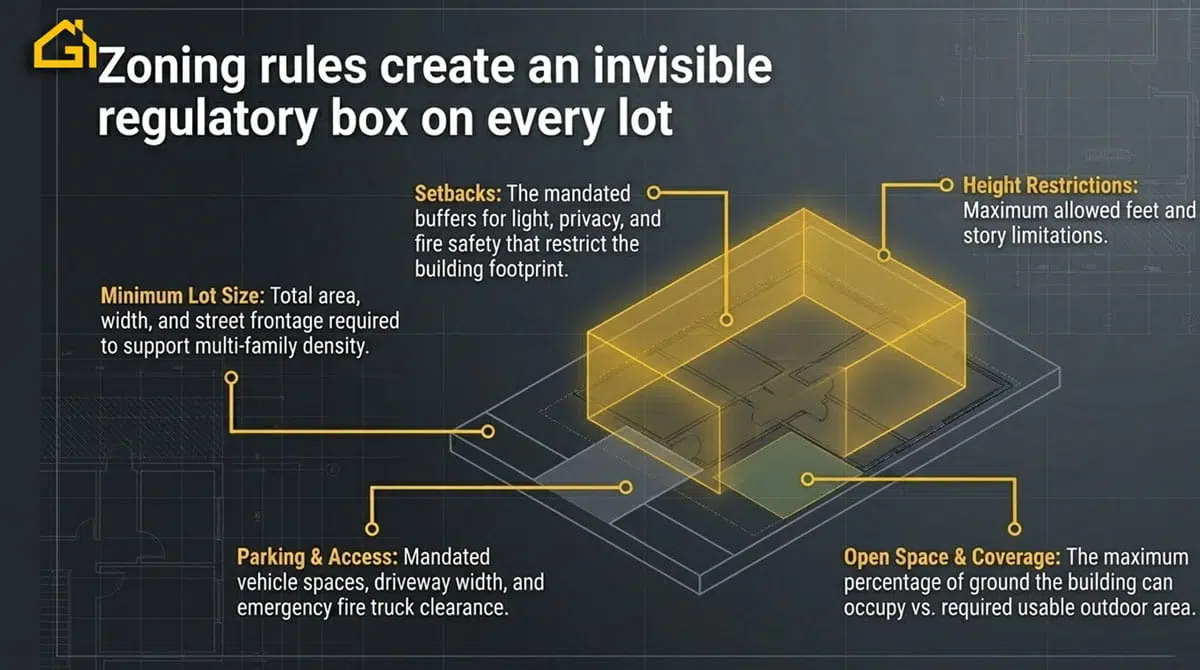
Receiving Fourplex Building Permits in Santa Clara County depends on more than simply choosing a multifamily zoning district. Planning departments evaluate several development standards that control how the property can be built and how the project fits within the surrounding neighborhood. These zoning rules influence the size of the building, the number of units allowed, parking layout, and the usable space left on the lot.
Minimum Lot Size Requirements
A four‑unit residential building generally requires a parcel that meets the minimum lot size defined by the applicable zoning code. If the lot is too small, fitting four units while respecting setbacks, parking, and open space standards becomes difficult.
Planning departments usually review three basic site characteristics:
| Site Factor | Why It Matters |
|---|---|
| Total lot area | Determines whether the parcel can support multifamily density |
| Lot width | Affects building footprint and parking layout |
| Street frontage | Important for access, utilities, and fire department requirements |
Smaller or irregular parcels sometimes limit the feasibility of a fourplex even when zoning technically allows multifamily housing.
Density and Unit Limits
Zoning codes typically regulate how many residential units can be built on a parcel through density limits. In Santa Clara County, density is commonly expressed as units per acre or through maximum unit allowances tied to lot size.
For a fourplex project to qualify:
- The allowed density must support at least four residential units on the property.
- The parcel size must align with the density formula used in the zoning district.
- Some areas may allow increased density through state housing policies or local planning programs.
If the permitted density is lower than four units, the planning department will not approve Fourplex Building Permits in Santa Clara County for that site.
Setback Requirements
Setbacks regulate the distance between a structure and the property boundaries. These rules are essential for light, privacy, and fire safety between neighboring properties.
Instead of affecting the number of units directly, setbacks influence how the building fits on the site. For example, a narrow lot with large side setbacks may restrict the available building footprint. In those cases, architects must carefully design the structure to fit within the allowed buildable area.
Height Restrictions
Height limits prevent new buildings from overwhelming surrounding homes and help maintain neighborhood scale. Most residential zoning districts establish a maximum building height measured in feet, and sometimes also limit the number of stories.
A typical fourplex proposal will be evaluated against:
- Maximum permitted building height
- Story limitations in the zoning district
- Roof structures or architectural projections that count toward height
Projects that exceed these limits usually require design revisions before moving forward in the permitting process.
Parking Requirements
Parking standards often have a direct impact on whether a fourplex project can realistically move forward. Even when zoning allows four units, the site must still accommodate the required number of parking spaces.
Common parking considerations include:
- Minimum parking spaces required per residential unit
- Location of parking areas or garages
- Driveway width and access points
- Accessibility requirements for certain spaces
On smaller parcels, parking layout can become the main constraint that shapes the overall building design.
Open Space and Lot Coverage Rules
Zoning regulations also control how much of the property can be occupied by buildings. These rules ensure that multifamily developments maintain livable outdoor space and adequate site drainage.
Two measurements are typically reviewed during planning approval:
| Requirement | Purpose |
|---|---|
| Lot coverage limit | Prevents buildings from covering too much of the parcel |
| Required open space | Ensures residents have usable outdoor areas |
If a proposed design exceeds the allowed lot coverage or fails to provide the required open space, adjustments must be made before Fourplex Building Permits in Santa Clara County can move forward to the plan review stage.
The Fourplex Building Permit Process in Santa Clara County
Obtaining Fourplex Building Permits in Santa Clara County is a structured, multi‑stage process that moves from land‑use verification to final inspection. Each step builds on the previous one. Skipping early due diligence often leads to delays during plan review or costly redesigns later. Below is a clear breakdown of how a typical fourplex project moves from concept to occupancy.
Although the steps for multifamily development have their own requirements, many of the permitting stages follow a similar structure to residential construction projects outlined in The Complete Process of Building a Custom Home in Santa Clara.
Step 1: Zoning and Feasibility Analysis
Before design work begins, the property should undergo a zoning and site feasibility review. This early evaluation confirms:
- The zoning district allows four residential units
- The lot meets density and minimum size standards
- The project can comply with setbacks, height, parking, and open space rules
- No overlays, easements, or special planning constraints affect development
This step is critical. Many delays in Fourplex Building Permits in Santa Clara County originate from skipping a proper feasibility check.
Step 2: Architectural and Engineering Design
Once feasibility is confirmed, detailed plans are prepared. A fourplex typically requires coordinated work between multiple professionals.
Design documents generally include:
| Discipline | Scope of Work |
|---|---|
| Architectural | Floor plans, elevations, site layout |
| Structural | Foundation and framing calculations |
| Civil (if required) | Grading, drainage, utility connections |
| Energy compliance | Title 24 documentation |
At this stage, the design must fully reflect zoning compliance to avoid corrections during review.
Step 3: Submitting Plans for Plan Check
Completed drawings are submitted to the appropriate building department for formal review. The submission may be handled electronically or in person depending on the jurisdiction.
During plan check, multiple departments review the project, such as:
- Building division
- Planning department
- Fire department
- Public works or utilities
The goal is to verify that the proposed fourplex complies with building codes, zoning regulations, fire safety standards, and infrastructure requirements.
Step 4: Plan Review and Corrections
It is common for reviewers to issue written correction comments. These may address structural details, code compliance, fire access, or zoning clarifications.
Typical correction categories include:
- Code compliance adjustments
- Clarification of structural calculations
- Accessibility requirements
- Fire protection modifications
Plans must be revised and resubmitted until all comments are resolved. Efficient responses at this stage can significantly affect the overall timeline for Fourplex Building Permits in Santa Clara County.
Step 5: Permit Issuance
Once all departments approve the plans and required fees are paid, the building permit is issued. At this point, construction can legally begin.
The issued permit authorizes work strictly according to the approved drawings. Any changes made after issuance may require plan revisions or additional approvals.
Step 6: Inspections During Construction
Throughout construction, scheduled inspections ensure that the building complies with approved plans and building codes.
Common inspection stages include:
- Foundation inspection
- Framing inspection
- Electrical, plumbing, and mechanical inspections
- Insulation and energy compliance checks
- Final building inspection
Work cannot proceed to certain phases until inspections are passed.
Step 7: Final Approval and Occupancy
After all required inspections are successfully completed, the project receives final approval. The building department may issue a Certificate of Occupancy or final sign‑off confirming that the fourplex is safe for residential use.
Only after this approval can the units legally be occupied or leased. Properly navigating each stage of the process ensures that Fourplex Building Permits in Santa Clara County move forward without unnecessary delays.
Documents Required for a Fourplex Building Permit
Before Fourplex Building Permits in Santa Clara County can be approved, applicants must submit a complete plan set and supporting technical documents. Building departments rely on these documents to confirm that the project complies with zoning regulations, structural safety standards, energy codes, and local infrastructure requirements. Missing or incomplete documentation is one of the most common reasons plan review gets delayed.
Site Plan
The site plan shows how the fourplex will be positioned on the property and how the building relates to lot boundaries and surrounding features.
A typical site plan identifies:
- Property lines and lot dimensions
- Building footprint and distances from setbacks
- Driveways and parking layout
- Walkways and access points
- Utility connections and easements
Planning reviewers use this drawing to verify that the project fits within zoning rules such as setbacks, lot coverage, and parking requirements.
Architectural Drawings
Architectural plans provide a detailed representation of the building’s layout and appearance. These drawings allow plan reviewers to evaluate building code compliance and the overall design of the four‑unit structure.
Typical architectural drawings include floor plans, exterior elevations, roof plans, door and window schedules, and building sections. Together, these documents illustrate how each unit is arranged, how the structure is accessed, and how the building fits within the site.
Structural Engineering Plans
Structural plans demonstrate that the building will be safely constructed according to California building codes. These documents are usually prepared and stamped by a licensed structural engineer.
The structural package generally contains foundation plans, framing details, structural calculations, and specifications for load‑bearing elements. During the review process, building officials verify that the structure can safely support expected loads, including seismic forces common in California.
Energy Compliance (Title 24)
California’s Title 24 energy standards apply to most residential construction projects, including fourplex developments. As part of the permit application, applicants must submit energy compliance documentation demonstrating that the building meets state efficiency requirements.
Title 24 documentation typically addresses insulation performance, window efficiency, HVAC systems, and lighting standards. Compliance forms are reviewed during plan check before Fourplex Building Permits in Santa Clara County can move forward to approval.
Utility and Fire Department Requirements
In addition to building and zoning review, fourplex projects must satisfy requirements from utility providers and fire authorities. These agencies review aspects of the project related to infrastructure and emergency access.
Common review items include:
- Fire department access and emergency vehicle clearance
- Fire hydrant proximity and fire protection systems
- Water and sewer connection approvals
- Electrical service coordination with utility providers
Clearances from these departments are usually required before final permit issuance.
Types of Fourplex Permits You’ll Need
Developing a four‑unit residential building usually requires more than a single permit. In most cases, Fourplex Building Permits in Santa Clara County involve several approvals that address construction safety, site conditions, infrastructure connections, and land‑use compliance. The exact combination of permits depends on the project scope, site conditions, and the jurisdiction reviewing the application.
Building Permit
The building permit is the primary authorization that allows construction of the fourplex to begin. It confirms that the approved plans meet California Building Code requirements as well as local development standards.
This permit typically covers the structural construction of the building, including foundations, framing, roofing, and other major components. Construction cannot legally start until the building department issues this permit.
Grading Permit
A grading permit may be required if the project involves significant earthwork, such as excavation, soil movement, or changes to the natural slope of the property.
Projects that trigger grading permits often include:
- Site leveling before construction
- Excavation for foundations or underground utilities
- Drainage improvements or retaining walls
Grading permits ensure the work complies with safety, erosion control, and stormwater management regulations.
Fire Permit
Fourplex developments must also meet local fire safety requirements. Depending on the jurisdiction and project design, the fire department may review aspects such as building access, fire protection systems, and hydrant availability.
Fire permits or fire department approvals may apply to elements like:
- Fire sprinkler systems
- Fire alarm systems
- Emergency access routes for fire vehicles
These reviews typically occur alongside the building permit process.
Electrical, Plumbing, Mechanical Permits
Separate trade permits are often required for systems installed within the building. These permits ensure that each system meets applicable safety codes and installation standards.
Common trade permits include:
- Electrical permits for wiring, panels, and service connections
- Plumbing permits for water supply, drainage, and fixtures
- Mechanical permits for HVAC systems and ventilation equipment
Each system is inspected during construction before final approval is granted.
Planning / Land Use Application
In some cases, a planning or land‑use application must be approved before Fourplex Building Permits in Santa Clara County can be issued. This typically occurs when the project requires discretionary review or special planning approval.
Examples may include:
| Situation | Possible Planning Review |
|---|---|
| Zoning interpretation or compliance review | Planning clearance |
| Development exceeding standard limits | Conditional use permit or variance |
| Projects in overlay or special districts | Design or planning review |
If a planning approval is required, it usually occurs before the building permit application moves forward to full plan review.
How Long Does It Take to Get a Fourplex Permit in Santa Clara County?
The timeline for obtaining Fourplex Building Permits in Santa Clara County can vary depending on the jurisdiction, project complexity, and how complete the initial submission is. In general, small multifamily projects such as fourplex developments go through several review cycles before approval. If the plans comply with zoning rules and building codes from the beginning, the process tends to move significantly faster.
Typical Plan Check Timelines
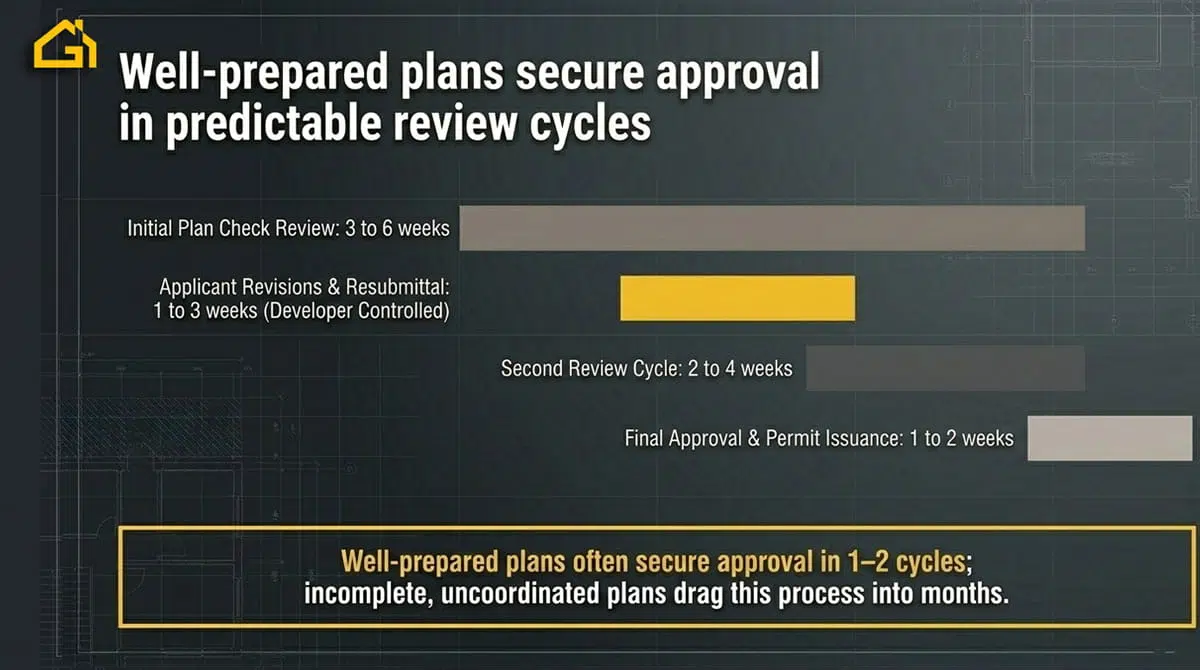
While exact timelines differ between cities and county jurisdictions, the plan review process usually follows a predictable pattern. The initial plan check is the longest stage because multiple departments review the project simultaneously.
| Review Stage | Typical Timeframe |
|---|---|
| Initial plan check review | 3 to 6 weeks |
| Applicant revisions and resubmittal | 1 to 3 weeks |
| Second review cycle | 2 to 4 weeks |
| Final approval and permit issuance | 1 to 2 weeks |
If the plans are well prepared, many fourplex projects receive approval after one or two review cycles.
Factors That Can Delay Permit Approval
Several issues commonly extend the timeline for permit approval. Many delays occur not because the project is impossible, but because the submitted plans require clarification or revisions. Many of these permitting challenges are also part of the broader construction delays discussed in Why Does Construction Take So Long in San Jose?
Common causes of delays include:
- Incomplete or inconsistent construction drawings
- Zoning conflicts related to density, setbacks, or parking
- Missing structural calculations or engineering documentation
- Fire department access or safety concerns
- Changes to the design during plan review
When these issues appear during the review process, the building department will issue correction comments that must be addressed before Fourplex Building Permits in Santa Clara County can be approved.
Tips to Speed Up the Approval Process
Property owners and developers can reduce delays by preparing carefully before submitting plans. Several practical steps often make a noticeable difference in the approval timeline.
- Conduct a zoning and feasibility review before design begins
- Work with experienced architects and engineers familiar with local codes
- Submit a complete and coordinated plan set
- Respond quickly and clearly to plan check correction comments
Projects that follow these practices usually move through the permitting process more efficiently and avoid unnecessary review cycles.
Estimated Costs for Fourplex Permits and Development
The total cost of obtaining Fourplex Building Permits in Santa Clara County goes far beyond the permit itself. Developers must account for several categories of expenses, including city or county review fees, technical design services, and the construction budget. The final numbers vary depending on the project size, the jurisdiction, and the complexity of the building design.
Permit and Plan Check Fees
Permit and plan check fees are paid directly to the local building department. These fees cover the cost of reviewing the architectural and engineering plans, processing the permit application, and conducting inspections during construction.
For fourplex projects, these fees often include:
- Building permit fee
- Plan review (plan check) fee
- Inspection fees
- Technology or administrative processing fees
In Santa Clara County jurisdictions, permit and review fees for a small multifamily project can range from several thousand dollars to tens of thousands depending on project valuation.
Impact and Development Fees
Many cities in Santa Clara County require developers to pay impact fees that support public infrastructure and community services. These fees are typically calculated based on the number of housing units or the total building area.
Common development fees may include:
| Fee Type | Purpose |
|---|---|
| School impact fees | Supports local school district facilities |
| Park or recreation fees | Funds public parks and recreational infrastructure |
| Transportation impact fees | Helps improve roads and transportation systems |
| Utility connection fees | Covers connections to water and sewer services |
These charges can represent a significant portion of the overall development budget for a four‑unit project.
Design and Engineering Costs
Before submitting an application for Fourplex Building Permits in Santa Clara County, a complete set of professional design documents must be prepared. This work typically involves several specialists.
Design and engineering costs may include:
- Architectural design and drafting
- Structural engineering calculations
- Civil engineering for drainage or grading
- Energy compliance documentation (Title 24)
- Surveying or site analysis
For a fourplex project, design services often represent a noticeable early investment but are essential for producing a compliant and approvable plan set.
Construction Cost Considerations
Construction is usually the largest financial component of a fourplex development. Costs depend heavily on building size, materials, site conditions, and contractor pricing in the local market.
Key factors that influence construction costs include building complexity, foundation requirements, parking design, and accessibility features required by building codes. Labor and material costs in Santa Clara County are also higher than the national average, which developers should factor into early budgeting.
Understanding these cost categories early helps property owners evaluate whether a fourplex project is financially viable before moving forward with the permit process.
Common Challenges When Permitting a Fourplex
Even when zoning appears to allow multifamily housing, obtaining Fourplex Building Permits in Santa Clara County is not always straightforward. Many projects face delays during planning review or plan check because the proposal does not fully align with local development standards. Understanding the most common issues can help property owners prepare stronger applications and avoid unnecessary revisions.
Zoning Conflicts
One of the most frequent challenges occurs when the proposed project does not fully comply with the zoning designation of the property. This may involve density limits, lot size requirements, or land‑use restrictions that limit how many units can be built on a specific parcel.
In some cases, the zoning technically allows multifamily housing but the lot characteristics make a fourplex difficult to approve. Narrow lots, irregular parcel shapes, or special zoning overlays can complicate the review process and require design adjustments or additional planning review.
Parking and Access Issues
Parking requirements often become a practical constraint for fourplex developments. Local codes may require a minimum number of parking spaces per unit, along with safe driveway access and proper maneuvering areas.
Common parking‑related problems include insufficient space for required parking stalls, limited driveway width, or conflicts with existing site features. Fire department access requirements can also affect site layout, especially when emergency vehicle clearance is required.
Setback or Height Violations
Setback and height standards are another area where many fourplex designs encounter problems during plan review. These regulations control how close a building can be to property lines and how tall the structure can be.
If the proposed building footprint exceeds setback limits or the structure surpasses the maximum allowed height, the project may require redesign or formal planning approvals such as a variance. Addressing these constraints early in the design phase is critical for securing Fourplex Building Permits in Santa Clara County.
Incomplete Plan Submittals
Permit applications are frequently delayed simply because the submitted documents are incomplete or inconsistent. Missing drawings, unclear details, or coordination issues between architectural and engineering plans often trigger correction comments from the building department.
A complete plan set should clearly show the site layout, building dimensions, structural details, energy compliance documentation, and utility connections. When the initial submission is thorough and well coordinated, the review process typically moves much more efficiently.
Conclusion
Obtaining Fourplex Building Permits in Santa Clara County requires careful planning, a clear understanding of zoning regulations, and a well‑prepared set of construction documents. From verifying whether the property allows four residential units to navigating plan check reviews, permit approvals, and construction inspections, each stage plays a critical role in the success of the project. Developers who evaluate zoning constraints early, prepare complete architectural and engineering plans, and coordinate with local planning and building departments are far more likely to move through the permitting process smoothly and avoid costly delays.