
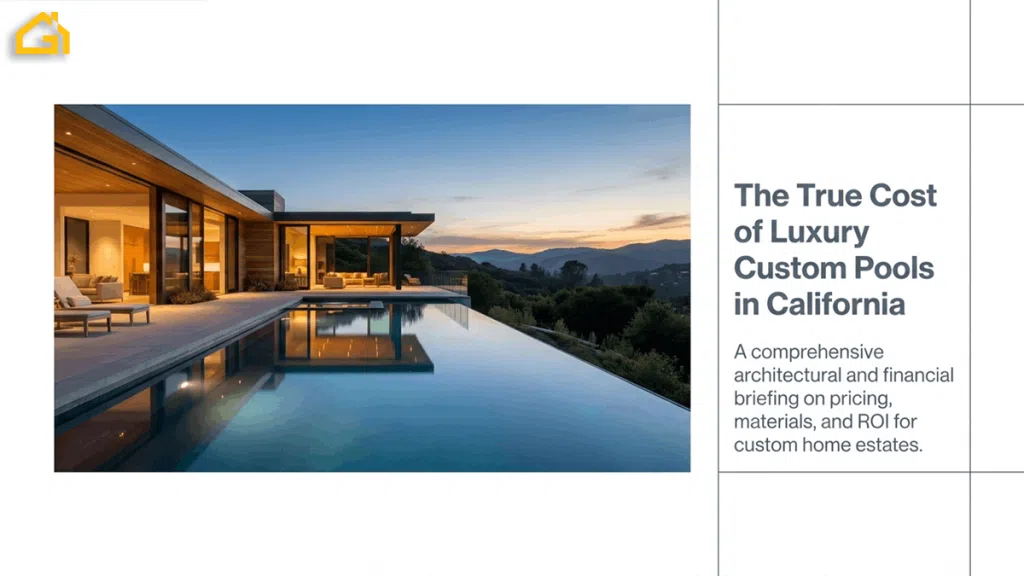
A swimming pool in a California custom home is less about adding a feature and more about shaping how the entire property lives and feels. The right design choices, site conditions, and how seamlessly the pool integrates into the overall architecture make the difference between a pool that feels like an afterthought and one that anchors the entire outdoor living experience. That is why early planning, well before construction begins, makes such a big difference in the outcome.
What Shapes Pool Planning in California
Building a pool in California is not quite like building one anywhere else. A few factors make the planning phase here more involved than in most other states:
Skilled labour demand: Custom pool work in markets like the Bay Area or Los Angeles requires specialized crews, and the best teams tend to be booked out well in advance. Planning early, often alongside the home’s design phase rather than after move-in, gives you access to the contractors capable of executing complex, architecturally integrated designs.
Permits and engineering: Unlike many states where a pool permit is fairly routine, California requires detailed structural engineering plans, especially in fire-prone or hillside zones. The review and approval process adds real time to a project schedule, so it is worth building into the timeline from day one rather than treating it as a late-stage formality.
Soil reports: For hillside sites, common in markets like Malibu, Bel Air, or the hills above San Jose, a geotechnical soil report is mandatory before any excavation begins. This step directly informs how the pool can be shaped, positioned, and supported on the lot.
Water efficiency requirements: Many California counties require water-efficient circulation systems, variable-speed pumps, and additional documentation in drought-designated areas. These are not optional add-ons; they are built into how a compliant pool is designed and specified from the start.
These are just a few examples of the hidden considerations of building a custom home that homeowners often overlook during early planning.
Pool Construction Methods for Custom Homes
Choosing the right construction method is one of the earliest and most consequential decisions in a custom pool build. Each material comes with its own design possibilities, installation timeline, and long-term maintenance profile, and in California’s luxury market, this choice is rarely a toss-up.
Gunite / Concrete Pools
Gunite is the dominant choice for custom homes in California. The construction method involves spraying a mixture of cement and sand over a steel rebar framework, meaning the pool can be shaped into virtually anything. Infinity edges, beach entries, zero-depth sun shelves, and freeform lagoon designs are all standard territory.
That design freedom is usually non-negotiable for custom builds: a pool that genuinely complements a hillside architectural home needs to be built to match it, and gunite is the only material that allows that level of integration. The tradeoff is a longer build timeline, often three to six months, and the need for replastering every 10 to 15 years.
Fibreglass Pools
Fibreglass pools arrive as pre-manufactured shells and are craned into a pre-excavated hole, which makes installation significantly faster, often three to six weeks. The surface is smooth and non-porous, which reduces algae growth and cuts down on chemical maintenance over time.
The tradeoff is design flexibility: you are choosing from existing molds, so custom shapes and full architectural integration with the home’s design are largely off the table. That is why fibreglass rarely appears in true luxury custom builds in California, though it can make sense for secondary residences or more modest projects where a faster timeline matters more than a bespoke shape.
Vinyl Liner Pools
Vinyl pools are the least common option in the California custom home market, particularly at the luxury level. Liners typically need replacement every 7 to 12 years, and design options are limited in a similar way to fibreglass. If a future buyer is comparing your property to comparable listings, a vinyl pool can work against perceived value rather than for it, which is why it is rarely the first choice for architecturally driven custom builds.
Design Features That Elevate a Custom Pool
In a custom home build, the feature list is often what turns a well-built pool into a defining part of the property. A few of the most common upgrades in California’s luxury market:
- Infinity edge: Creates a visual connection between the pool and the surrounding landscape or view. Complexity varies enormously. A small vanishing edge on a flat lot is a very different engineering problem than a three-sided infinity edge cantilevered over a hillside, which requires additional structural support and a catch basin.
- Built-in spa: Integrated spas share equipment with the main pool, making them a natural pairing rather than a separate system.
- Baja shelf / tanning ledge: Especially popular in Southern California, adding both a functional lounging space and a distinct visual element.
- Automation systems: Buyers at this price point increasingly expect to control lighting, heating, jets, and cleaning from a single app. A pool without that capability can feel dated during a showing. These systems can also integrate with a full home automation platform like Control4 or Crestron.
- Heating (gas or solar): Solar systems have a longer-term payoff in operating efficiency, while gas heating offers more immediate, flexible control.
- Custom lighting: LED colour systems and fibre optics are now standard in luxury builds.
- Waterfalls and fire features: Natural stone waterfalls and integrated fire bowls add both ambience and a strong visual anchor point.
- Premium tile and finishes: This is the single biggest variable in a pool’s final aesthetic. The difference between standard plaster and a custom glass mosaic finish is significant, which is why it is worth locking in finish selections early, before construction is underway.
Matching Pool Design to Property Size and Scale
Pool design should scale with the home itself. In California’s custom market, there is a fairly clear relationship between property size, buyer profile, and what an appropriate pool design looks like.
For a broader perspective on how outdoor amenities fit into an overall build, it is worth reviewing what goes into the luxury custom home build in Silicon Valley before finalizing plans for a pool.
Small Luxury Homes and ADU Estates
Space constraints do not mean the pool has to feel like an afterthought. The focus here shifts toward smart, compact design. A well-proportioned plunge pool, a lap pool, or a small gunite design with one or two well-chosen features can look genuinely impressive without a sprawling footprint. Lot size is usually the deciding factor, since many smaller custom sites do not leave much room for a large pool.
Standard Custom Homes (2,500 to 5,000 sq ft)
This is the most common category for custom home pools in California, and expectations vary widely within it. A home in the Inland Empire and one in Newport Beach can fall in the same size bracket but call for very different designs. At this level, buyers typically expect a fully custom gunite shape, at least one or two premium features such as a spa, tanning ledge, or custom lighting, quality tile and plaster finishes, and a basic automation system.
Ultra-Luxury Estates
At this tier, the pool is rarely just a pool. It is part of a broader outdoor living environment that might include a full outdoor kitchen, fire features, a separate spa, a cabana structure, and landscaping designed around the water as a central focal point. What drives the design here is large-scale engineering, premium imported materials, custom water features, and sophisticated automation working together as one cohesive space. In markets like Bel Air, Atherton, or Rancho Santa Fe, a pool that looks anything less than extraordinary can actually work against the property at resale.
Regional Design Considerations Across California
California is not a single market, and pool design expectations shift with the region. Labour availability, permit complexity, terrain, and local buyer expectations all shape what an appropriate design looks like in each area.
- Bay Area: Hilly terrain is the defining factor here, often requiring more structural engineering and longer permit timelines in certain jurisdictions.
- Los Angeles / Orange County: High contractor demand shapes scheduling more than anything else. Hillside properties in areas like Hollywood Hills or Palos Verdes add permit and engineering steps before construction even begins.
- San Diego (coastal vs. inland): Coastal areas like La Jolla and Rancho Santa Fe tend to mirror LA-level design expectations, while inland San Diego generally involves simpler terrain and more straightforward permitting.
- Inland Empire: Generally the most straightforward terrain and permitting process in Southern California, though buyer expectations in newer luxury communities still call for well-executed, feature-rich designs.
Does a Pool Add Value to a Custom Home in California?
In much of the country, a pool is a debatable investment at resale. In California’s custom home market, with its warm climate and strong outdoor living culture, a well-executed pool is a genuine value driver, particularly in Southern California markets where a home without one can feel incomplete to serious buyers.
That said, the value is not automatic. Three factors tend to determine whether a pool works in a home’s favour at resale:
- Design quality: A pool that looks architecturally connected to the home adds value. A dated or generic design that clearly does not belong with the property can work against you, and buyers at the luxury tier notice the difference immediately.
- Neighbourhood standards: In markets like Bel Air, Rancho Santa Fe, or Atherton, a pool is a baseline expectation, and skipping it puts a home at a disadvantage against comparable listings. In more modest communities, an overbuilt pool can push a home out of its natural buyer pool.
- Maintenance condition: A poorly maintained pool is one of the fastest ways to lose value at resale. Buyers discount heavily for deferred maintenance, cracked finishes, or outdated equipment, while a pool in excellent condition signals overall home care.
Conclusion
Designing a swimming pool for a California custom home depends on far more than picking a shape out of a catalogue. Site conditions, regional permitting, construction method, and feature selection all interact in ways that reward early, thoughtful planning, treating the pool as part of the home’s architecture rather than an afterthought. Following a comprehensive custom home build checklist can help homeowners plan more effectively from the start.